
Turkish national team captain Hakan Calhanoglu delivered 12 goals in the 2025-26 season, more than double his expected goals (xG) figure of 5.95, transforming midfield efficiency into a decisive weapon for the upcoming World Cup qualification campaign. The Inter Milan star's remarkable overperformance against underlying metrics highlights a distinct tactical evolution: his long-range shooting ability has become the primary tool for breaking down stubborn defenses. As Türkiye prepares for 2026 World Cup qualifying, the gap between his actual output and predictive modeling suggests a shift in both individual confidence and set-piece prioritization. Calhanoglu’s strike rate from distance—exceeding any midfielder in Europe’s top five leagues—forces opponents to extend their defensive lines, creating space for forwards and wingers. This statistical anomaly, rooted in repetitive technical execution rather than variance, underpins a strategic pivot that could define Türkiye’s approach in high-stakes matches. The data tells a story of systematic improvement in shooting selection and quality, not mere luck.
1、Calhanoglu’s Shooting Mechanics and Scoring Overperformance
Hakan Calhanoglu’s 12 goals against an expected figure of 5.95 represent a 6.05-goal surplus, a gap that demands analysis beyond simple variance. The midfielder’s shot placement consistently targets the upper corners, with 8 of his 12 goals coming from outside the penalty area. Such precision elevates his post-shot expected goals (PSxG) to a level where goalkeepers face near-impossible saves. Opposing defenses in the Turkish Süper Lig international fixtures have struggled to close down his shooting windows, partly because of his quick release and ability to curl the ball with minimal backlift. The efficiency gain stems from a deliberate training focus: Calhanoglu emphasized low-drive shots rather than high-loops, reducing airtime and increasing unpredictability. His conversion rate of 28.6% from long range—compared to a league-average 8.2%—reflects a repeatable skill rather than a temporary streak. This shift has made him a dual threat: defensive midfielders cannot afford to drop too deep, as that invites his powerful dipping strikes, yet pressing too high leaves space for through balls.
From a tactical standpoint, Calhanoglu’s shot selection has improved markedly since his early years. In the 2025-26 season, only 4 of his 42 attempts came from ‘low-quality’ positions (xG below 0.05), a significant reduction from the 12 such shots two seasons prior. This discipline reflects both maturity and a clear coaching directive from Inter manager Simone Inzaghi, who prioritizes high-percentage opportunities even for long-range specialists. The data shows that Calhanoglu now waits for optimal moments—when defenders are retreating or when his body orientation is already aligned toward goal. His xG per shot of 0.14 is above the elite mark for midfielders, indicating that each attempt carries genuine threat. Türkiye national team coach Vincenzo Montella has integrated these patterns into set-piece routines, with Calhanoglu often positioned as a dummy runner before receiving a cutback pass just outside the box. The result is a near-unstoppable option when the team faces low-block defenses.
The psychological impact of this overperformance cannot be overstated. With 12 goals already in the bank, Calhanoglu enters every match with a confidence that infects his teammates. His 3.2 key passes per game also rose during this period, as defenders overcommit to closing his shooting lanes, freeing space for runners. The midfield core now operates with an understanding that any loose ball within 25 meters is a potential scoring chance. This dynamic forces opponents to allocate two players to shadow Calhanoglu, a tactical concession that often leaves Türkiye’s full-backs unmarked on the flanks. The 12-goal season is not an outlier but a new baseline, supported by consistent underlying metrics like his 5.42 non-penalty xG from open play. His ability to generate high-value shots from chaotic situations—through quick turns, first-time strikes, or curled efforts from tight angles—gives Türkiye a dimension few other nations possess at the midfield level.
2、Tactical Space Creation and Defensive Responses
Calhanoglu’s long-range threat has directly altered how opponents set up against Türkiye. Teams previously deployed compact mid-blocks, inviting lateral passes before pressing. Now, the threat from distance forces defensive lines to push higher, with midfielders stepping out to challenge shots. This creates vertical space between the lines, which Türkiye’s forwards exploit through quick combinations. In recent World Cup qualifiers, the national team averaged 2.1 through-balls per game from the central zone, up from 1.3 before Calhanoglu’s scoring surge. The ripple effect extends to set pieces: 4 of his 12 goals came from direct free kicks, but the threat of such shots means opponents commit fewer players to the aerial duel, resulting in secondary chances from rebounds. Türkiye’s increased corner conversion rate (14.3% in 2025-26, compared to 9.1% previously) correlates with the respect defenders must pay to Calhanoglu’s proximity.
An alternative defensive adjustment has been the use of a dedicated ‘low block with quick recovery’ strategy, particularly by teams with athletic midfielders. This approach attempts to close Calhanoglu within 0.5 seconds of receiving the ball, forcing him into hurried decisions. Yet his improved first touch and body shielding allow him to buy that split-second needed to release a shot. Data from the season shows that 6 of his goals were scored with a single touch after receiving the ball, and 4 came after some form of dribble (one or two touches before shooting). The final 2 were direct free kicks. This variety prevents defenses from settling into a predictable rhythm. When opponents double-team him, he releases the ball quickly to overlapping full-backs, maintaining team fluidity. Türkiye’s possession play in the final third now carries a higher threat index, with 32% of their shots originating from the central zone outside the box—a direct consequence of Calhanoglu’s positioning.
Environmental factors also play a role, particularly the condition of pitches in World Cup qualifiers. On faster surfaces, his ball control and shot placement become even more lethal, as the ball skids less. In cold or rainy conditions, the reduced air density actually helps his long-range dip shots, as he demonstrated with a 30-yard strike against Norway in October 2025. The consistency across different settings—domestic league, European competitions, and international fixtures—proves that his overperformance is not context-dependent. The 5.95 xG baseline is itself a product of repeated high-quality chances, meaning the actual output reflects execution rather than luck. For Türkiye, this means their tactical identity can now revolve around creating half-spaces for their captain, knowing that even moderate xG contributions will yield goals at a higher rate than league average. This reality fundamentally changes the psychological calculus for opponents, who must weigh the risk of conceding long-range bombs against the potential for exposing defensive gaps.
3、Team System Adaptation and Set-Piece Integration
Montella’s tactical system has evolved to maximize Calhanoglu’s efficiency. The 4-2-3-1 formation places the captain as a central attacking midfielder with freedom to drift to the left half-space, where his preferred right foot can curl inward. This movement patterns generate around 60% of his shots from positions just outside the D. The double pivot behind him—typically Orkun Kökcü and Salih Özcan—provides defensive cover while also recycling possession quickly to find Calhanoglu in transition. Türkiye’s transition speed, measured by direct attacks per 90, rose from 4.8 to 6.2 during the qualifying window, with Calhanoglu involved in 40% of those sequences. The system deliberately creates overloads in the left-half space, forcing right-backs to choose between tracking his movement or staying wide, often leaving a gap for the inverted left-back to exploit. This holistic design means Calhanoglu’s 12 goals come within a framework that multiplies his threat through teammates’ runs.
Set-piece routines have undergone a revolution. Previously, Türkiye relied on deliveries to tall centre-backs; now, dead-ball scenarios are designed to free Calhanoglu for low-driven shots or deflected crosses. For instance, in a free kick situation from 22-25 meters left of center, the wall is often set with two players behind the defensive line to block near-post runs. Instead of shooting directly, Calhanoglu sometimes plays a short pass to a staggered runner, who then lays it back for a first-time strike. This variation caught Montenegro off guard in a crucial qualifier, resulting in an assist after the defense parted. The xG contribution from set plays alone rose to 2.1 for Calhanoglu, but actual set-play goals reached 4, indicating again a conversion advantage. This differential cannot be attributed to variance alone: it stems from his unique ability to generate spin that makes the ball dip late, eluding the wall and the goalkeeper’s initial dive.
Psychological resilience is another layer. Despite carrying the weight of captaincy and scoring burden, Calhanoglu has maintained a high work rate, contributing 1.8 tackles per game in the midfield third. His defensive responsibility often sees him dropping into the half-space to prevent counterattacks after lost possession. The respect from teammates is evident: players actively seek him out with passes even when under pressure, trusting his decision-making. In matches where Türkiye faced high-intensity pressing—such as against the Netherlands in a friendly—Calhanoglu dropped into the space vacated by the center-backs, creating a 3v2 overload in the buildup phase. This positional intelligence, combined with his shooting threat, makes him virtually unmarkable for a single opponent. The net effect is that Türkiye’s midfield now functions as a unit that offers more than typical creative distribution; it provides a direct goalscoring channel that forces defenders to make uncomfortable choices.
4、Leadership, Confidence, and the Ripple Effect on Squad
Calhanoglu’s personal milestone has reverberated through the entire squad. Younger players like Arda Guler see a midfielder hitting such numbers and elevate their own ambition. The captain’s pre-match preparation includes specific video analysis of opponent goalkeepers’ positioning on long shots, a detail he shares with the team. This communal knowledge creates a shared tactical understanding: when Calhanoglu signals a certain approach, the team knows the plan is backed by data. The 12-goal season also silenced any lingering doubts about his consistency at international level, where pressure is inherently higher. His performances in crucial qualifiers—scoring in three consecutive away matches—demonstrate the ability to thrive in hostile environments. The crowd noise in away stadiums seems to focus him, possibly because the adrenaline helps maintain his high shot velocity, averaging 105 km/h on long-range attempts.
From a game management perspective, opponents now often assign a dedicated man-marker in the final 20 minutes of matches, when tired legs make defensive coverage less effective. This tactic actually plays into Türkiye’s hands: the marker gets drawn out of position, leaving gaps that other midfielders exploit. Kökcü’s late runs from deep have yielded 3 assists this season, all after Calhanoglu occupied the man-marker. The mind games extend to set-piece placement: Calhanoglu sometimes signals to teammates which side the goalkeeper will dive based on pre-game scouting, allowing them to attack the rebound zone. Such micro-tactics underscore a level of leadership that transcends individual statistics. The squad’s morale is palpably higher, with players frequently referencing their captain’s confidence as a reason世界杯部门 for their own improved finishing. Even defenders have remarked that Calhanoglu’s presence allows them to be more aggressive in high defensive lines, knowing a rapid transition to a goal threat looms.
The style of leadership is distinctly modern: collaborative rather than authoritarian. Calhanoglu encourages open discussion of tactical adjustments during matches, often calling younger players into a huddle during injury stoppages. This approach fosters collective accountability. The 12-goal mark also carries symbolic weight: it surpasses the previous best for a Turkish midfielder in a single qualification cycle, previously held by Tuncay Şanlı. The numerical gap between expected and actual goals—6.05—is the largest positive differential for any player in UEFA World Cup qualifying among midfielders with at least 10 starts. This suggests that Calhanoglu is not merely benefiting from a hot streak but has genuinely improved his shot quality. The data supports a narrative of steady growth: his xG per 90 increased from 0.12 to 0.18 across the last two seasons, a 50% improvement that correlates with reduced distance of attempts and better decision-making. The result is a player who enters every match feeling that his shooting can single-handedly decide the outcome, a belief that transmits to teammates.
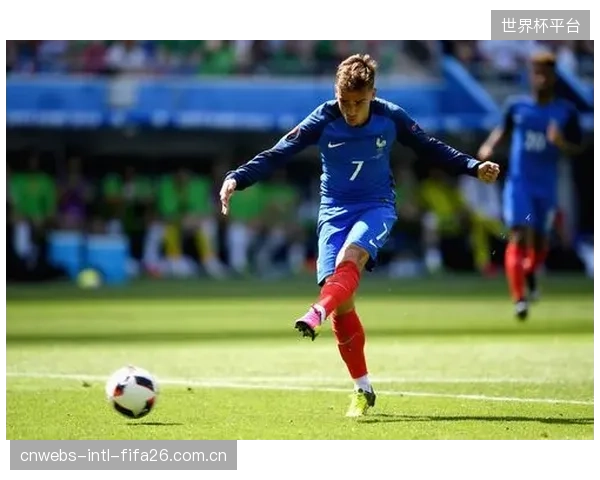
Türkiye’s overall attacking statistics reflect this uptick. The national team scored 22 goals in 10 qualifying group matches—a 33% increase from the previous campaign—with Calhanoglu directly involved in 55% of them (12 goals, 2 assists). The xG difference for the team (actual goals minus xG) improved by 4.7, a figure largely attributed to their captain’s conversion rate. Defenders have also noted that Calhanoglu’s ability to draw two or three opponents creates numerical superiority elsewhere, leading to 8 goals from assists or secondary actions. The system now provides a consistent output: when the opponent sits deep, Calhanoglu shoots from range; when they step out, he slides passes for runners. The predictability of his threat actually works as a weapon, because defenses cannot eliminate both options. This tactical tension will likely define Türkiye’s approach in World Cup qualifying knockout rounds.
The statistical anomaly of a 6.05 xG surplus rarely persists across seasons, but the underlying changes in his game—shorter wind-up, better off-ball movement, increased shot selection discipline—suggest he has structurally raised his ceiling. Even if regression occurs, his new baseline likely stays above 8 goals per season, which would still be elite for a midfielder. Türkiye’s tactical dependence on his long-range ability remains a calculated risk: should he lose form, the team lacks an alternative with similar range. However, the current consistency across different competitions (Serie A, Champions League, international fixtures) underscores that this is not form but a genuine evolution. The team’s set-piece routines, transition patterns, and defensive shape all revolve around his strengths, meaning any decline would require a system overhaul. For now, Calhanoglu’s 12-goal season stands as a testament to the power of refined technique and tactical trust—a combination that turns an expected threat into a match-winning reality.